From Trash to Earth: What Really Happens to a Compostable Bag After You Toss It
5 Trillion Plastic Bags a Year. And We Barely Notice.
May
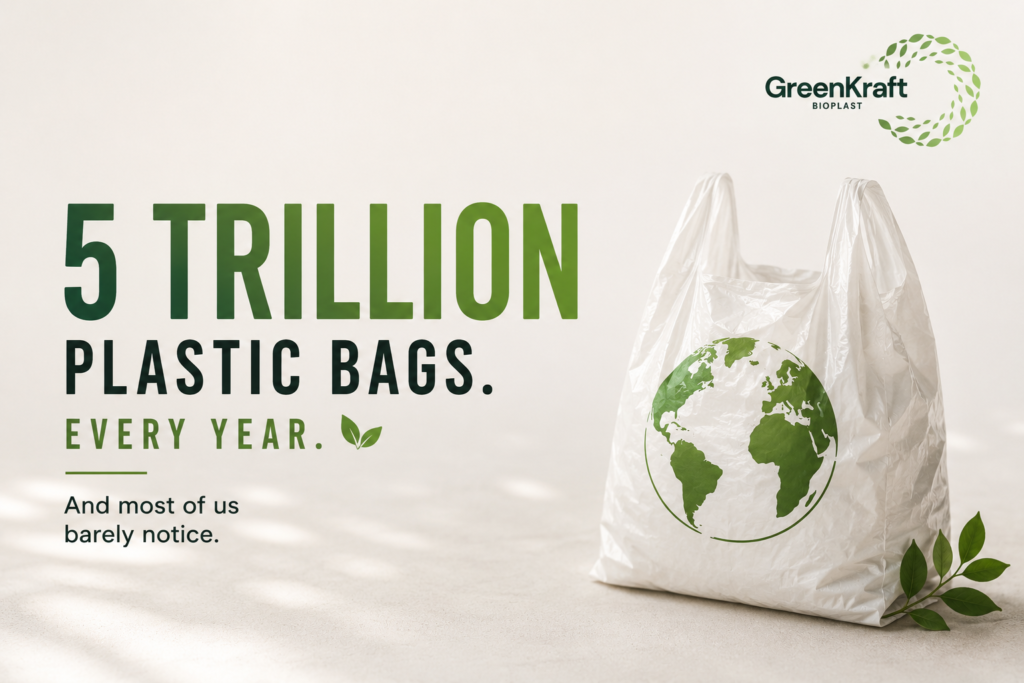
The world uses approximately 5 trillion plastic bags every year.
Sit with that number for a moment. 5 trillion.
It is so absurdly large that it almost stops feeling real. Numbers at that scale tend to do that. They become abstract. They lose their weight. So let us actually break it down into something the human brain can hold.
5 trillion bags a year works out to 13.7 billion bags every single day. That is 570 million bags every hour. 9.5 million every minute. Nearly 160,000 bags every second.
Every second.
By the time you finish reading this blog, millions more will already have been used somewhere in the world. While you were reading. While you were distracted by a notification. While you were doing absolutely nothing related to plastic packaging at all.
And the strange part is that most of us barely notice.
The packaging that became invisible
Not because we are careless people. That is not the point being made here. But because plastic packaging has slipped so quietly and so completely into the rhythm of daily life that it has essentially become background noise.
Think about the last 24 hours of your life.
There was probably a courier packet at your door, or at least one on its way. There was bread packaging on your kitchen counter, or a wrapper from something you ate without thinking about. There is almost certainly a dustbin liner sitting under your sink right now. A pharmacy bag folded into some drawer. A garment cover from a recent online order. Bubble wrap from something that needed protecting. Tiny pouches carrying cables, snacks, medicines, spices, screws, earphones, or any of the hundred small things that now arrive packaged to your doorstep.
Plastic packaging is not just the grocery bag in your hand. It is woven into almost every transaction, every delivery, every purchase, every kitchen shelf and medicine cabinet in the modern world.
And it got there not because the world is reckless but because it genuinely solves real problems.
Why packaging exists in the first place
This part of the conversation tends to get skipped over, and it really should not.
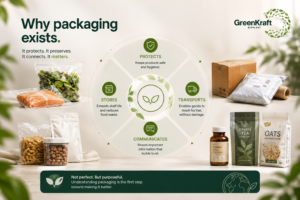
Packaging protects. It keeps food from spoiling before it reaches you. It keeps medicines uncontaminated. It keeps fragile things from breaking in transit. It keeps products hygienic from the factory floor to the moment you open them.
Packaging stores. It extends the shelf life of products in ways that directly reduce food waste at a scale most people do not appreciate.
Packaging transports. It allows goods to move across cities and countries and continents without deteriorating. The global supply chain, for all its complexity, depends on packaging in ways that are genuinely difficult to overstate.
Packaging communicates. It carries information, dosage instructions, allergy warnings, expiry dates, brand identity. These are not frivolous things. For many products they are critical.
None of this means packaging has no problems. It has serious ones. But understanding why it exists and why it has become so deeply embedded in modern life is essential context before jumping to solutions.
Why the conversation has changed
For a long time the conversation around plastic packaging was fairly blunt. Plastic bad. No plastic good. Ban it, reduce it, feel guilty about it.
That framing was never really enough and most people who work seriously in this space know it.
The world is not stopping packaging anytime soon. That much is obvious. The question that actually matters, the one that responsible businesses and manufacturers are genuinely grappling with, is how do we use it more responsibly at this scale?
And that question opens up into a set of more specific, more useful ones.
What material is actually right for this application? Is there a recycled option that performs as well as virgin material for this use case? What happens to this packaging after the customer is done with it? Is the manufacturer being honest about what the product is and what it can and cannot do?
These are the questions that move the conversation forward.
Material choices are not a small detail
The difference between a recycled plastic bag and a conventional one is not just environmental. It is a signal about how a business thinks. About whether it is paying attention to where its supply chain is heading. About whether it understands that the customers and clients it serves are increasingly paying attention too.
Recycled plastic packaging gives existing plastic another round of usefulness before it reaches the end of its life. That is not a perfect solution. Nothing in this space is perfect. But it is a real, working, available one that businesses can act on right now without waiting for infrastructure or regulation to catch up.
Compostable packaging is a genuine long term direction but it comes with conditions. Proper certification matters. The composting environment matters. A bag labelled compostable without the right certification and the right end of life pathway is not meaningfully better than a conventional one. These distinctions matter and anyone selling packaging should be honest about them.
Recycling infrastructure matters. The choices manufacturers make about what they produce and what they encourage their clients to source matter. None of it operates in isolation.
Why this conversation is the one worth having
At GreenKraft Bioplast we manufacture recycled and virgin plastic packaging out of Sachin GIDC, Surat. Our compostable range is going through proper certification because we believe that making a claim you cannot stand behind is worse than not making it at all. We also offer 6 colour ceramic plate flexographic printing for businesses that want their packaging to carry their brand as sharply as it carries their product.
We think about these questions every day. About material choices, about what responsible manufacturing actually looks like in practice, about how to be honest with clients about what different products can and cannot do.
Because the number is 5 trillion bags a year. And it is not going down meaningfully anytime soon. Which means the responsibility of everyone in this industry, from manufacturers to brands to retailers to consumers, is to make sure that as much of that packaging as possible is made thoughtfully, sourced responsibly, and used as well as it possibly can be.
Not because packaging is disappearing.
But because it isn’t.
Because plastic packaging solves genuine, practical problems at scale. Protection, hygiene, storage, transport, shelf life. These needs are not going away and plastic has been the most cost effective and versatile solution for decades. The challenge now is not to eliminate packaging but to use it more responsibly.
Recycled plastic is made from plastic that has already been used, collected, processed and reformed into new material. It performs comparably to virgin plastic for most everyday applications and reduces the demand for new plastic production. Regular or virgin plastic is made from fresh raw material with no prior use history.
Not automatically. Compostable packaging breaks down under specific conditions, usually in certified industrial composting facilities. Without those conditions it may not break down meaningfully at all. Recycled plastic, by contrast, gives existing material another useful life regardless of composting infrastructure. The right choice depends on the application and the end of life pathway available.
Because not all manufacturers apply the same standards to materials, thickness, print quality or honesty about what their products actually are. Sourcing from a manufacturer who is transparent about materials, certifications and capabilities means you can make informed decisions rather than relying on labels that may not tell the full story.
Start with whether they manufacture directly or trade through middlemen. Ask whether printing is done in house or outsourced. Ask about material options and what certifications they hold or are working toward. And ask whether they understand your specific use case rather than just offering a standard catalogue. The answers to those questions will tell you most of what you need to know.