From Trash to Earth: What Really Happens to a Compostable Bag After You Toss It
The One Plastic Product Nobody Wants to Ban
Jul
For years, the conversation around plastic has moved in one direction.
Ban it. Phase it out. Replace it with something better. And across a lot of categories, that conversation has translated into real action. Single use bags restricted. Straws phased out. Foam packaging coming under increasing regulatory pressure across markets worldwide.
But there is one plastic product that nobody is rushing to ban.
Nobody is protesting against it. No government campaign is asking you to carry less of it. No sustainability influencer is making videos about refusing to use it.
Money.
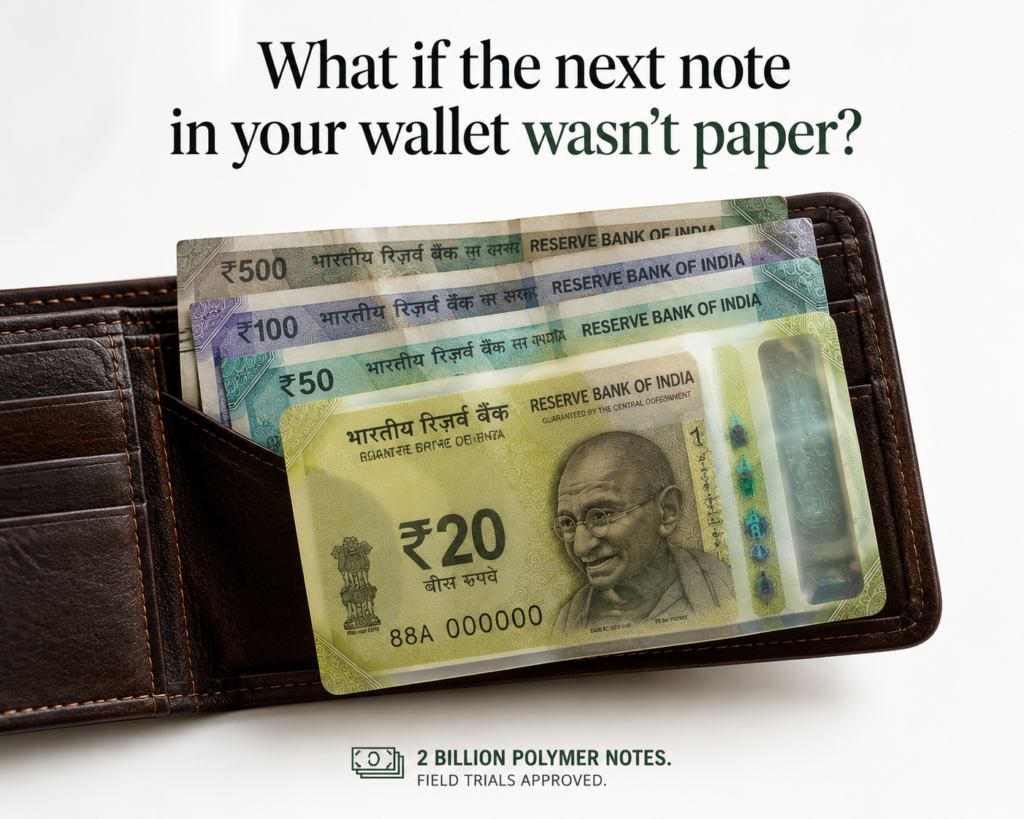
India has approved field trials for 2 billion polymer banknotes. 1 billion ₹10 notes and 1 billion ₹20 notes, made from plastic. The same material that has spent the better part of two decades being positioned as the enemy of responsible consumption.
And the response has been largely… fine. Curious, even. Interested.
Nobody is outraged. Because somewhere, instinctively, most people understand why.
The life of a banknote is brutal
Think about what a currency note actually goes through.
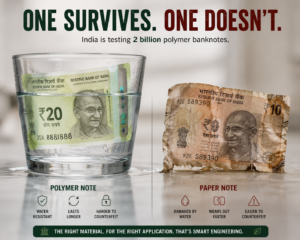
It gets folded, crumpled, stuffed into the back pocket of jeans that go through a washing machine. It gets rained on, dropped in puddles, passed between thousands of hands in markets and shops and autorickshaws. It lives in wallets wedged under phones and cards and old receipts. It survives conditions that would destroy most materials within weeks.
Paper does a reasonable job of this. But polymer does it significantly better. Polymer notes last far longer, resist water and dirt, and are considerably harder to counterfeit thanks to security features that paper simply cannot accommodate at the same level.
Nobody looked at polymer and thought, we should use plastic for money despite it being plastic. They looked at the problem and asked what material actually solves it best. Polymer was the answer.
That is it. That is the whole story.
But it is also a much bigger story than currency
The reason this piece of news stayed with me is that it is a quiet but very clear illustration of something that gets lost in the broader conversation about materials.
We have spent so long talking about plastic as a category that we have started judging it as a character rather than a material. Plastic is bad. Paper is good. Compostable is virtuous. Recycled is responsible.
These are not wrong instincts exactly. But they are incomplete ones.
A material is not good or bad in the abstract. It is useful or not useful for a specific application. And the moment you start evaluating materials that way, the conversation becomes much more interesting and much more honest.
Paper performs brilliantly in many applications. It is renewable, printable, familiar, and often exactly the right call. Compostable materials solve problems that conventional plastic cannot, particularly in food applications where contamination makes recycling impractical. Recycled plastic gives existing material another round of usefulness and reduces the pressure to produce something new. Virgin plastic continues to matter wherever clarity, hygiene, strength or performance consistency are genuinely non-negotiable.
None of these materials is winning. None of them is losing. They are all answers to different questions.
The question most people forget to ask
In packaging, we hear versions of the same thing constantly. Should we switch everything to paper? Is recycled plastic always the responsible choice? Why is anything still made from virgin material?
These are fair questions. But they share a common assumption that there is one correct material waiting to replace everything else. There is not. There has never been.
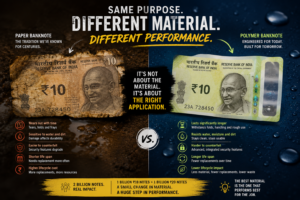
The better question is not which material is better. It is which material is better for this, right now, in this application, with this end of life pathway.
Those two questions look almost identical on paper. They lead to completely different decisions.
India’s polymer banknote trial is a useful reminder of that. A country willing to put plastic on its currency after years of reducing plastic elsewhere is not being contradictory. It is being precise. It chose the material that deserved to be there for that particular job.
That kind of thinking, choosing on the basis of what actually works rather than what currently sounds right, is what responsible manufacturing looks like in practice.
Where GreenKraft Bioplast fits into this
We manufacture virgin and recycled plastic packaging from our facility in Sachin GIDC, Surat. Our compostable range is going through proper CPCB certification because we believe making a claim correctly matters more than making it quickly. We also offer 6 colour ceramic plate flexographic printing for businesses that want their packaging to look as deliberate as the material choice behind it.
Every time a client asks us what they should be using, the honest answer starts with a question back to them. What does this packaging need to do? What will it go through? What happens to it after?
The material follows the answer. Not the other way around.
Because the one plastic product nobody wants to ban is not special because it is plastic.
It is special because for that job, nothing else does it better.
And that is exactly how every material decision should be made.
FAQ
Because different applications have genuinely different requirements. Currency notes face extreme conditions that paper handles less effectively than polymer. The decision to trial polymer notes is about performance for that specific use case, not a contradiction of broader environmental policy.
It means the conversation around materials is becoming more precise, which is a good thing. Polymer banknotes that circulate for years and are recycled at the end of their life have a very different environmental profile from a single use bag used once and discarded. The material is the same. The application and the outcome are completely different.
For many everyday applications yes. But not universally. There are use cases where virgin plastic, paper, or certified compostable materials are genuinely the better answer depending on what the packaging needs to do and what happens to it afterwards. The honest answer almost always starts with the application rather than the material.
Start with the job the packaging needs to do. What conditions will it face? What are the performance requirements? What is the realistic end of life pathway? A manufacturer who asks those questions before recommending anything is more useful than one who leads with a price list.
We manufacture virgin and recycled plastic packaging and are working through CPCB certification for our compostable range. We also offer in-house flexographic printing across all material types. Our starting point with every client is always understanding the application before recommending a solution.