From Trash to Earth: What Really Happens to a Compostable Bag After You Toss It
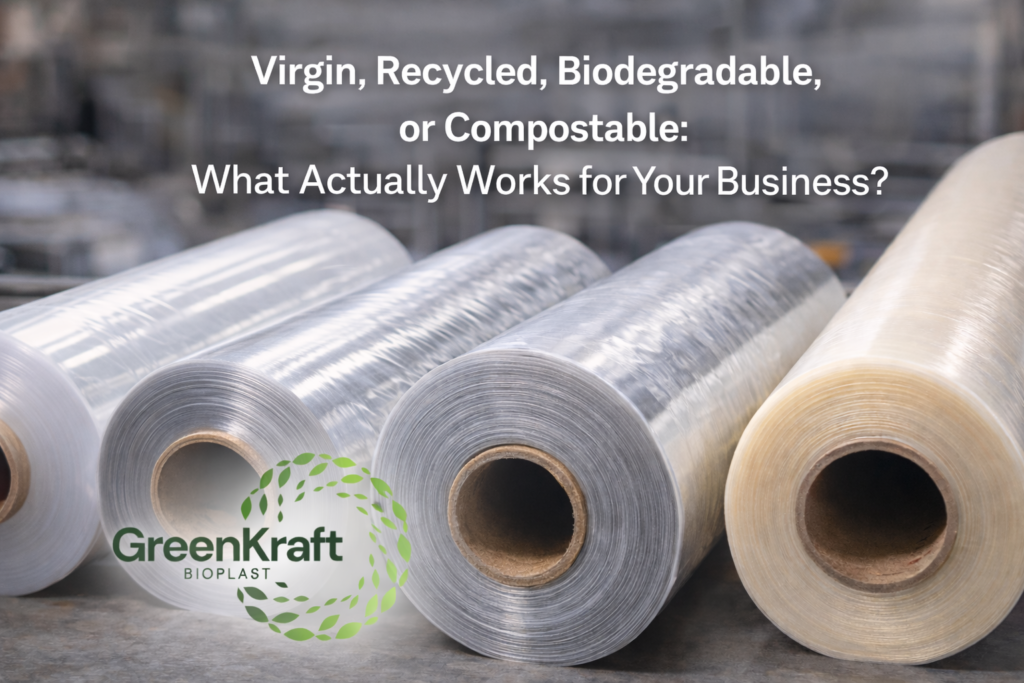
Virgin, Recycled, Biodegradable or Compostable: A Straightforward Guide to Choosing the Right Packaging for Your Business
Apr
Choosing packaging used to be simple. You picked a bag, placed an order, and moved on. That is not really the case anymore.
Today most businesses are weighing up cost against performance against what their customers expect, all at the same time. And a growing number are also starting to ask what happens to the packaging after it leaves their hands. The options have multiplied. The clarity has not always kept up.
This guide breaks down the four main packaging materials in plain terms so you can make a decision that actually fits your business rather than just your supplier’s inventory.
The problem is rarely a shortage of options
Walk into any conversation with a packaging supplier in India right now and you will hear about recycled material, biodegradable alternatives, compostable options, and everything in between. Most businesses come out of those conversations with more questions than they went in with.
What actually matters is understanding what each material does well, where it falls short, and which one makes sense for the kind of business you are running.
Virgin plastic: when consistency is non-negotiable
Virgin plastic is made from fresh raw material that has not been processed before. It offers the most uniform finish, the highest tensile strength, and the most predictable performance across a run.
For businesses where packaging failure is not an option, this tends to be the starting point. Export products, premium retail presentation, high speed packing environments where variation causes problems downstream. If your product demands reliability above everything else, virgin material is usually the right answer.
The tradeoff is cost. It is the most expensive of the four options. For businesses moving high volumes of packaging where strength matters more than margin on the bag itself, that cost is usually justified.
Recycled plastic: where most businesses find their balance
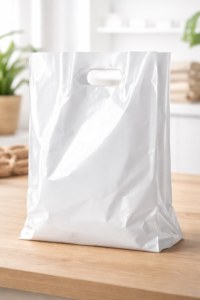
Recycled plastic, made from post-consumer resin, is where the majority of B2B packaging decisions in India land. And for good reason.
The strength is sufficient for most everyday applications. Carry bags, garbage bags, wholesale packaging, industrial liners. The cost is considerably lower than virgin material. Supply is reliable. For businesses focused on keeping their packaging spend practical without compromising on basic performance, recycled material does the job well.
This is also where the environmental argument becomes genuinely credible rather than cosmetic. Using recycled material reduces the demand for new plastic production in a meaningful, measurable way. It is not a marketing claim. It is just how the material works.
At GreenKraft Bioplast we manufacture both virgin and recycled plastic packaging while our compostable license is underway.
Biodegradable plastic: a transitional option
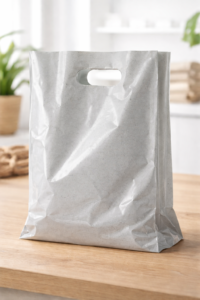
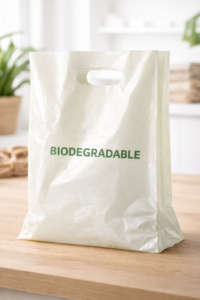
Biodegradable materials are designed to break down over time through natural processes. The performance varies depending on the specific material and the conditions it is exposed to, which is worth understanding before committing.
Biodegradable packaging is not a like for like replacement for standard plastic across all applications. In some it works well. In others the physical properties do not match what the business actually needs. It tends to be considered by businesses that are taking early steps toward reducing their environmental footprint without making a full transition yet.
If you are exploring this category, the important thing is to look at the specific material composition and not just take the label at face value.
Compostable plastic: a genuine long term direction
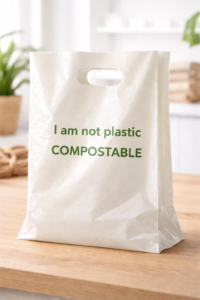
Compostable packaging is designed to break down into natural elements under defined conditions, typically in industrial composting environments. It represents the most structured and verifiable approach to alternative packaging currently available.
The infrastructure in India to support widespread compostable packaging use is still developing. That is just the honest reality. But the direction of regulation, consumer expectation and corporate sustainability commitments points fairly clearly toward compostable solutions becoming standard over the coming years.
Our compostable range is currently going through formal certification. We are not rushing that process. When it launches it will meet the standards properly rather than carrying a label that does not hold up to scrutiny.
A quick comparison before you decide
|
Material |
Best suited for |
Strength |
Availability |
|
Virgin |
Premium brands and heavy duty use |
Maximum |
Readily available |
|
Recycled |
Bulk supply and cost efficiency |
High |
Readily available |
|
Biodegradable |
Transitional and alternative applications |
Variable |
Moderate |
|
Compostable |
Future focused and certified sustainable use |
Moderate |
Growing |
Why the supplier matters as much as the material
Material choice is only part of the decision. The other part is how that material is processed and printed.
Micron consistency, load bearing capacity, film uniformity, print durability. All of these depend on the manufacturing process, not just the raw material. A good recycled plastic bag made well will outperform a poor quality virgin bag every time.
This is where in-house printing becomes relevant. Most packaging suppliers in India outsource their print work. That introduces variation, extends timelines and adds cost. At GreenKraft we print in-house on a six colour flexographic machine with ceramic plates. What is approved is what is produced. We also take up job work for businesses that need quality printing on their own material.
So what should your business actually choose
There is no single right answer and anyone who tells you otherwise is oversimplifying.
If your product requires maximum strength and a consistent finish, start with virgin. If cost efficiency is the priority and your application does not demand premium performance, recycled is almost certainly the better call. If you are exploring alternatives to standard plastic, biodegradable is worth a conversation. If you are thinking about where your business needs to be in five years from a sustainability standpoint, compostable deserves serious attention now even if the switch is not immediate.
The businesses that get this right tend not to pick one material forever. They make a decision that fits today and stay informed enough to adapt as their market, their customers and the regulatory environment evolve.
Packaging says something about your business whether you intend it to or not
Whether you are a textile manufacturer in Surat, a retail business in Ahmedabad or a growing brand anywhere in India, your packaging is one of the few things your customer actually touches. It reflects your standards as clearly as anything else you put out.
Treat the decision like it matters. Because to the customer holding the bag, it does.
Quick FAQ
Virgin plastic offers higher consistency and is better suited to applications where appearance and strength are critical. Recycled plastic is more cost efficient and handles the majority of everyday packaging needs well. Most businesses use recycled for bulk requirements and consider virgin only where the application specifically demands it.
It depends on the specific material and how it breaks down. Some biodegradable options perform well in the right conditions. Others fragment rather than fully breaking down, which creates a different set of problems. Always ask about the specific composition and breakdown process before assuming the label tells the full story.
The materials are ready. The composting infrastructure across India is still catching up. If your business has access to industrial composting or your customers do, it is a viable option now. For most businesses it is a direction worth planning for rather than an immediate switch.
Almost always yes. Factory direct pricing is lower, customisation is genuinely possible and accountability is straightforward. Traders add margin and distance between you and the people actually making your product.
Yes. Get in touch with your requirements and we will work out what makes sense before you commit to volume.