
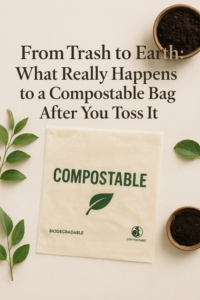

Category Archives: From Trash to Earth: What Really Happens to a Compostable Bag After You Toss It

We’ve all done it — finished our groceries, peeled off a compostable bag, and tossed it into the bin feeling a little proud.
But what really happens next? Does it truly “return to nature”?
Let’s follow the journey of a compostable bag — from your hands to the earth — and discover how every small choice makes a real difference.

🏡 Step 1: The First Step — Segregation at Home

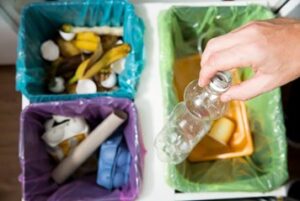
It all begins at home. Compostable bags are designed to go into the organic waste bin, along with food scraps, vegetable peels, and garden waste.
But here’s the catch — most of us still mix our waste. When compostable bags get thrown with regular plastics, they lose their purpose.

💡 Small fact: Compostable and biodegradable bags look very similar, so mixing them up is a common mistake. Always check for a certified compostable mark (like EN 13432 or ASTM D6400) before disposal.

By simply separating your waste into “wet” and “dry,” you’re giving your compostable bag the perfect start to its next life.

🔥 Step 2: The Heart of the Journey — Industrial Composting

Once your waste reaches a composting facility, that’s where the real magic begins.
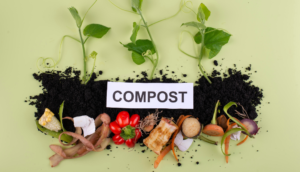
Compostable bags don’t just “disappear” — they break down naturally through aerobic composting, where heat, moisture, and microorganisms transform them into CO₂, water, and nutrient-rich biomass.

At industrial composting centers, temperatures can rise to 55–60°C, creating the perfect environment for decomposition in as little as 90–180 days.

🌍 Did you know? Each certified compostable bag has been tested to ensure it leaves no toxic residue — just clean, safe organic matter that can help plants grow again.

So yes, your compostable bag literally turns into soil food.

🌿 Step 3: The Home Composting Reality

Not every compostable bag needs an industrial plant.
Some types — labelled “home compostable” — can break down in your own backyard compost bin, although it may take a few extra months.

The process is slower because the heat and microbial activity are lower, but it still happens — especially when the bags are used to collect kitchen waste like peels and coffee grounds.

💡 Tip: Tear your compostable bag into smaller pieces before composting. It helps speed up the breakdown process naturally.

Even if you can’t compost all your bags, starting small — with just kitchen waste — makes a visible difference over time.

🚮 Step 4: What If It Ends Up in a Landfill?

Let’s be honest — not every compostable bag finds its way to a compost facility.
Some end up in landfills, where oxygen and heat are limited. In such conditions, decomposition slows down drastically.

But here’s the silver lining — unlike traditional plastics that can persist for centuries, compostable materials don’t release harmful microplastics or toxic residues.
They still degrade naturally over time without polluting the soil or groundwater.

So even when the system isn’t perfect, your compostable bag remains the cleaner, safer choice.

♻️ Step 5: Closing the Loop — Back to the Earth

After decomposition, compostable bags return to the soil as humus — the dark, nutrient-rich material that helps plants grow stronger.
That’s the full circle: what began as plant-based material becomes nourishment for new life again.

This is what true circular sustainability means — a process where waste isn’t just managed but reborn.

🌿 Quote to remember:

“We don’t need every bag to be perfectly composted. We just need most bags to be compostable — because that’s how change begins.”

Every time you choose compostable, you’re not just buying a bag — you’re investing in a cleaner waste ecosystem, a better tomorrow, and a greener planet.

🌎 In Conclusion

Compostable packaging isn’t just about replacing plastic — it’s about redefining what happens after.
Even if every bag doesn’t end up perfectly composted, your choice fuels awareness, supports waste infrastructure, and reduces plastic dependence.

At Greenkraft Bioplast, we believe every eco-conscious decision — big or small — helps close the loop between waste and nature.
Because when your bag returns to the earth, the planet breathes a little easier. 🌱


🧠 Quick FAQ: Compostable Bags, Simplified

Q1: Do compostable bags break down in landfills?
Not completely. Landfills lack oxygen, so the process slows down. But compostable bags still degrade without releasing harmful toxins or microplastics.

Q2: How long does a compostable bag take to decompose?
In an industrial composting facility — about 90 to 180 days. In home composting — around 6 to 12 months, depending on conditions.

Q3: Can compostable bags be recycled with plastic?
No. Compostable and plastic recycling systems are different. Mixing them can disrupt recycling batches, so always dispose of compostable bags in the organic or compost bin.

Q4: Are compostable bags safe for soil and plants?
Yes. Certified compostable materials leave behind only CO₂, water, and natural biomass — no harmful chemicals.

Q5: Where can I find certified compostable packaging in India?
Brands like Greenkraft Bioplast, based in Surat, Gujarat, specialize in certified compostable bags that meet global standards and deliver both performance and sustainability

Beyond Plastic: The Surprising Truth About Biodegradable vs. Compostable Alternatives
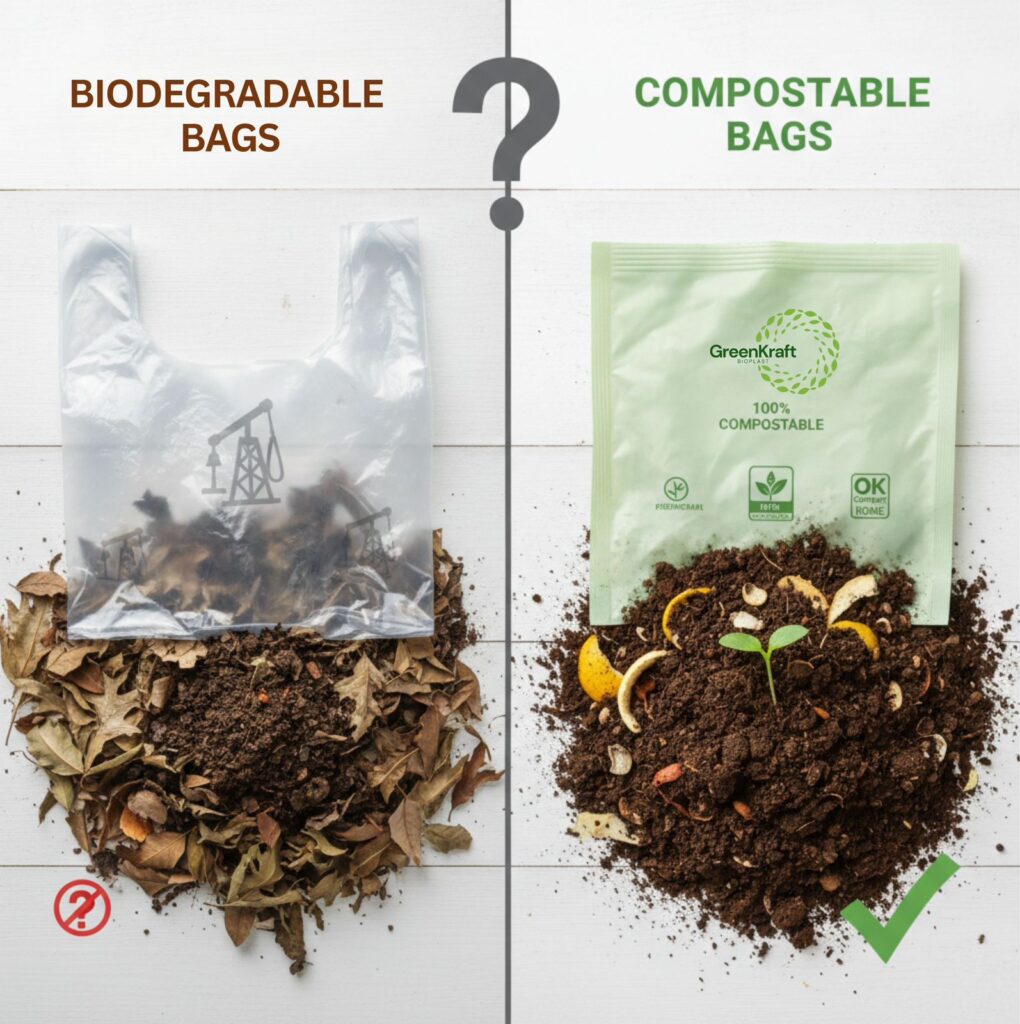
GreenKraft Bioplast: Compostable bags are the best eco-friendly plastic alternative compared to paper, cloth, and misleading biodegradable.

Plastic is everywhere. We see bans announced, reusable bags offered at checkout, and “eco” options popping up everywhere. Yet somehow, plastic pollution keeps growing. If plastic is the villain, what’s the real hero? And are today’s popular “plastic alternatives” actually better — or just cleverly marketed ? In this blog, we’ll take a clear, no-greenwashing […]
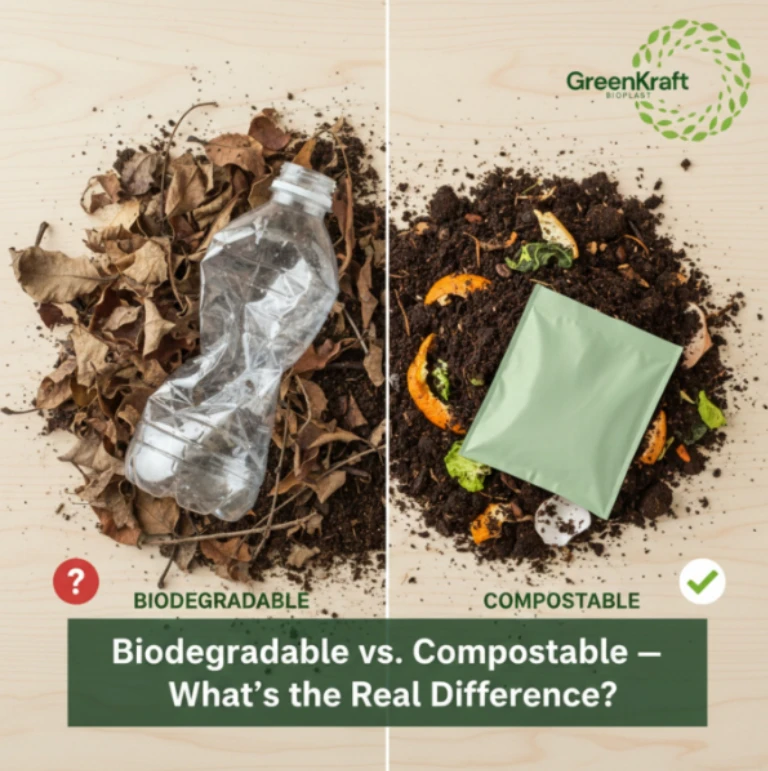
Biodegradable vs. Compostable: Why These Two ‘Green’ TermsAren’t the Same

Finally, a clear, no-greenwashing guide to understanding the difference between biodegradable and compostable materials. Learn what the certifications mean, why confusion exists, and how to identify truly eco-friendly packaging. Introduction: When ‘Green’ Gets Confusing “Biodegradable”, “compostable”, “eco-friendly” — these terms are everywhere. From plastic carry bags to food packaging, every label seems to claim some […]